Tag: Promoting financial literacy

  • Help your Staff Financially Recover with the Benefit of an ATM at Work

    Have your employees taken a hit financially due to the pandemic? The latest statists show that nearly two-thirds of Americans (67%) feeling financial strain due to the COVID-19 pandemic.

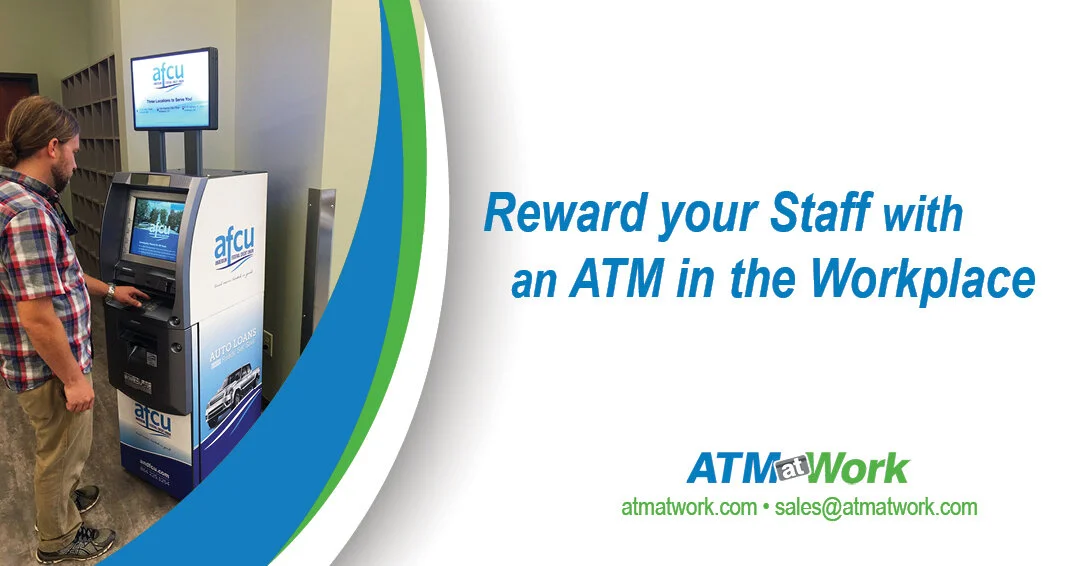
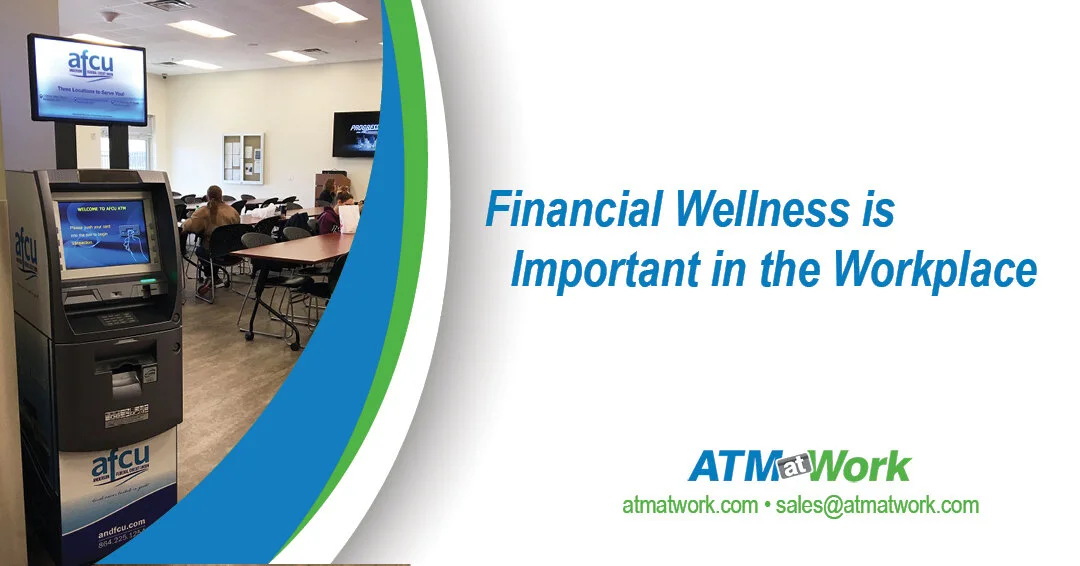
    Employers can help to alleviate the financial stress by providing staff with convenient cash access in the form of a surcharge-free ATM in the break room. Not only will this allow employees to save more of their hard earned paycheck, it is a benefit your staff will love that provides real value!

    • Surcharge-Free ATM Withdrawals

    • Saves Staff Time & Money

    • Safe, Secure Environment for Banking

    • Keeps Employees On-Site

    • Easy Cash Access for Lunch & Vending

    To set up a 10 minute custom consultation, email us at sales@atmatwork.com. We’ll be happy to walk you through the many benefits of having a workplace ATM and the surcharge-free ATM options we offer.

  • 4 Reasons Financial Wellness Is Important in the Workplace

    Originally published by Huffpost

    Traditional views of wellness focus on exercise and nutrition. And frankly, if everyone ate and exercised perfectly, life would be better for all of us. But counting steps, joining exercise challenges and eating healthy lunches are so much harder when we’re stressed about money. It’s time to take a look at the relationship between financial wellness and overall well-being.

    Here are a few reasons why financial wellness is a critical part of employee well-being:

    Finances are a Major Stressor
    Work isn’t the only thing stressing employees out ─ money can be a huge source of anxiety. In a 2015 PwC survey of working adults in the U.S., 45% of respondents said dealing with their finances is stressful.

    For some, money can be a constant source of stress. In fact, a 2015 report conducted by the American Psychological Association (APA) found that 72% of adults feel stressed about money at least some of the time, and 22% experience extreme financial stress. When it’s extreme, health suffers. Some respondents said they thought about skipping or actually did skip doctor visits because of financial concerns.

    The same APA study found that those in lower-income households with extreme financial stress are more likely to engage in unhealthy behaviors to manage that stress. Think watching TV for hours, ice cream binging and drinking one too many to manage that stress.

    We know that chronic stress is unhealthy on its own, but financial stress multiplies the impact. People may avoid health investments to save money.

    Managing Finances Takes Time
    Managing finances isn’t just stressful, it’s time-consuming. Without control of their financial health, employees bring their worries into the workplace. In fact, 37% of those surveyed by PwC said they spend three or more hours at work each week thinking about their personal finances.

    Some employees even miss work due to money woes, according to a SHRM survey in June 2014. Among HR pros surveyed, 37% indicated that employees had missed work because of a financial emergency. And another study published by Rand in 2015 found that lack of sleep, financial concerns and taking care of family members are negatively associated with productivity.

    Stress is distracting — and when employees worry about their financial wellness, they lose focus and are less productive in the office.

    Employees Want Support
    Employees feel the burden of all this stress, and they want their employers to help support financial wellness.

    Although the SHRM study found 81% of HR professionals said they provide retirement planning to their employees, a majority don’t provide credit score monitoring or financial literacy training.

    But employees, especially those just out of college, want financial planning benefits.

    In a 2015 survey of employees ─ published by Quantum Workplace and my company, Limeade — almost 40% of employees younger than 25 said they wanted their employer to provide these benefits. Employees who feel stress from money issues are looking for help to improve their financial wellness.

    Financial Wellness Improves Engagement
    In our study, 71% of employees surveyed said they want standard-of-living raises — but only 31% of employers provide them as financial benefits. I’m a big fan of market — and merit-based pay — but employers should be aware of cost-of-living realities, especially for lower-paid employees.

    Cost-of-living adjustments account for increased living expenses due to inflation. They may alleviate stress and allow more work focus. When you give employees these raises, they’re 15% more engaged, on average.

    Providing financial benefits also shows employees that the organization cares about them as individuals, inspiring loyalty and motivation. When employees feel their employers care about their health and well-being, they’re 38% more engaged.

    Investing in financial wellness boosts the overall well-being of employees, increasing their health, productivity and engagement.

    To set up a 10 minute custom consultation, email us at sales@atmatwork.com. We’ll be happy to walk you through the many benefits of having a workplace ATM and the surcharge-free ATM options we offer.

  • Why Having Financially Healthy Employees is as Important as Medically Healthy Staff

    “Only about 30 percent of your employees are doing well. The rest need help.”

    Imagine hiring the brightest doctor in the nation to come and assess your employees. After surveying each one, doing a complete examination, and running a series of tests, he comes to you with the news that 70 percent are unwell. How would you respond? Would you get the care and attention to make the company a more healthy workplace? Of course, you would!

    Unfortunately, this statistic isn’t imagined, but it may not be a problem for physicians to solve. According to a recent article, these numbers reflect the financial health of most Americans. Financial wellness is often overlooked but plays a critical role in the health of any organization. Not buying it? According to data from SUM180, an online financial planning service, 29 percent of employees admit to missing work to deal with stress caused by their own finances. That has a huge impact on your bottom line.

    Employers often think their industry is the exception to the rule despite data proving otherwise. In the article cited above, a survey by research provider Raddon found that 44 percent of responders said they were “very” or “extremely” literate, but when given a financial quiz, only six percent scored an “A.” And to open your eyes on how bad off employees are, a late March report showed 45.4 percent of consumers had $2,500 or less in savings, while 15.6 percent had no savings at all.

    But there is hope, and it’s easier than ever to help your staff. ATMatWork can match your company with a local bank or credit union that will offer a surcharge-free ATM in the workplace for your staff and bring solutions directly to your doorstep. Having a surcharge-free ATMs in your break room will immediately save your employees money. To see more data and the results your company could obtain, download our case study.

    Having a bank or credit union branded ATM in the workplace not only provides staff with savings, but they will consistently educate your employees. Partnering with ATMatWork means you have immediate access to financial pros for questions that can reduce the financial stress of employees. Many offer programs and discounts for the needs of employees that will bring the overall financial wellness of your company to a healthy level. From savings to mortgages, your company will have a financially healthy team working on your behalf.

    To learn more, call at 866.440.4700 or email us at sales@atmatwork.com. We’ll be happy to walk you through the many benefits of having an ATM on-site for employees and the surcharge-free ATM options we offer.

  • Using ATMs to Promote Financial Literacy

    One of the silver linings of the financial recession in the mid-2000s was that it was supposed to have taught consumers a hard lesson about the dangers of debt and other financial issues.

    However, statistics from CareerBuilder show that 78% of U.S. workers live paycheck to paycheck and one in four don’t save. And while most people acknowledge the need for emergency savings and a retirement plan, few understand how to attain those goals. A limited number of Americans can successfully implement a budget, leaving many adults in debt with no understanding of how to dig themselves out.

    In a 2015 study by FINRA, participants were asked five questions covering aspects of economics and finance encountered in everyday life, such as compound interest, inflation, risk and diversification principles, the relationship between bond prices and interest rates, and the impact that a shorter term loan can have on total interest payments over the life of a mortgage. Only 37% of participants were able to answer four or more of the five questions correctly – indicating that the majority of Americans are financially illiterate to some degree.   

    Americans Look to Banks & Credit Unions for Financial Planning

    A study by Raddon found that 55% of consumers are more likely to turn to a bank or credit union for resources on financial literacy than a financial adviser.

    The report also suggests banks and credit unions have an opportunity to entice consumers to switch financial institutions by engaging consumers with financial education. And, the best way to market retirement and wealth management programs is in small digestible chunks of information.

    However, the study also notes that financial institutions struggle internally with their support of financial literacy programs, mainly because these programs are expensive. Justifying the cost of educating account holders on financial literacy to upper management can be difficult since return on investment is difficult to document.

    ATMs as a Marketing Channel for Financial Literacy

    Banks and credit unions have been exploring the unique marketing capabilities ATMs offer such as customized screens and signage that help them enrich the consumer experience for some time. As a critical touch point for account holders, ATMs can also be used to educate consumers and market financial planning programs with little or no extra cost to the financial institution.

    Self-service options are also vital to the way younger generations, especially Millennials, manage their money, with statistics showing that mobile banking users are more likely to visit an ATM than a branch ‒ which strongly suggests ATMs are the perfect channel to market important financial services.

    Marketing financial planning programs while consumers are actively accessing their account and considering their personal spending habits makes them more likely to remember the services offered. The ATM also allows financial institutions to track participation in variety of ways, such as requests for information using a unique landing page URL, QR code, Text/SMS response or promotional code on the ATM wrap, screen and the receipt.

    Engaging Consumers at Work

    Employers all over the country are beginning to see the opportunity to enhance their workplace benefits by offering ATMs on-site. The practice is beneficial to employers and employees alike as it provides easy cash access in a secure environment and allows staff to better manage their time.

    By partnering with local companies, banks and credit unions can offer ATMs that allow surcharge-free transactions for account holders, increase brand awareness for the unbanked or competitor-affiliated user, and market their institution with financial education and retirement planning information in the environment where consumers are most likely to engage – the place they make their money.

    To help financial institutions better market financial education, ATMatWork offers:

    • Customized ATM wraps that can include a QR code

    • Rotating ATM screens and welcome screens customized for the institution

    • Static or video signage

    • Receipts that include promotional offers

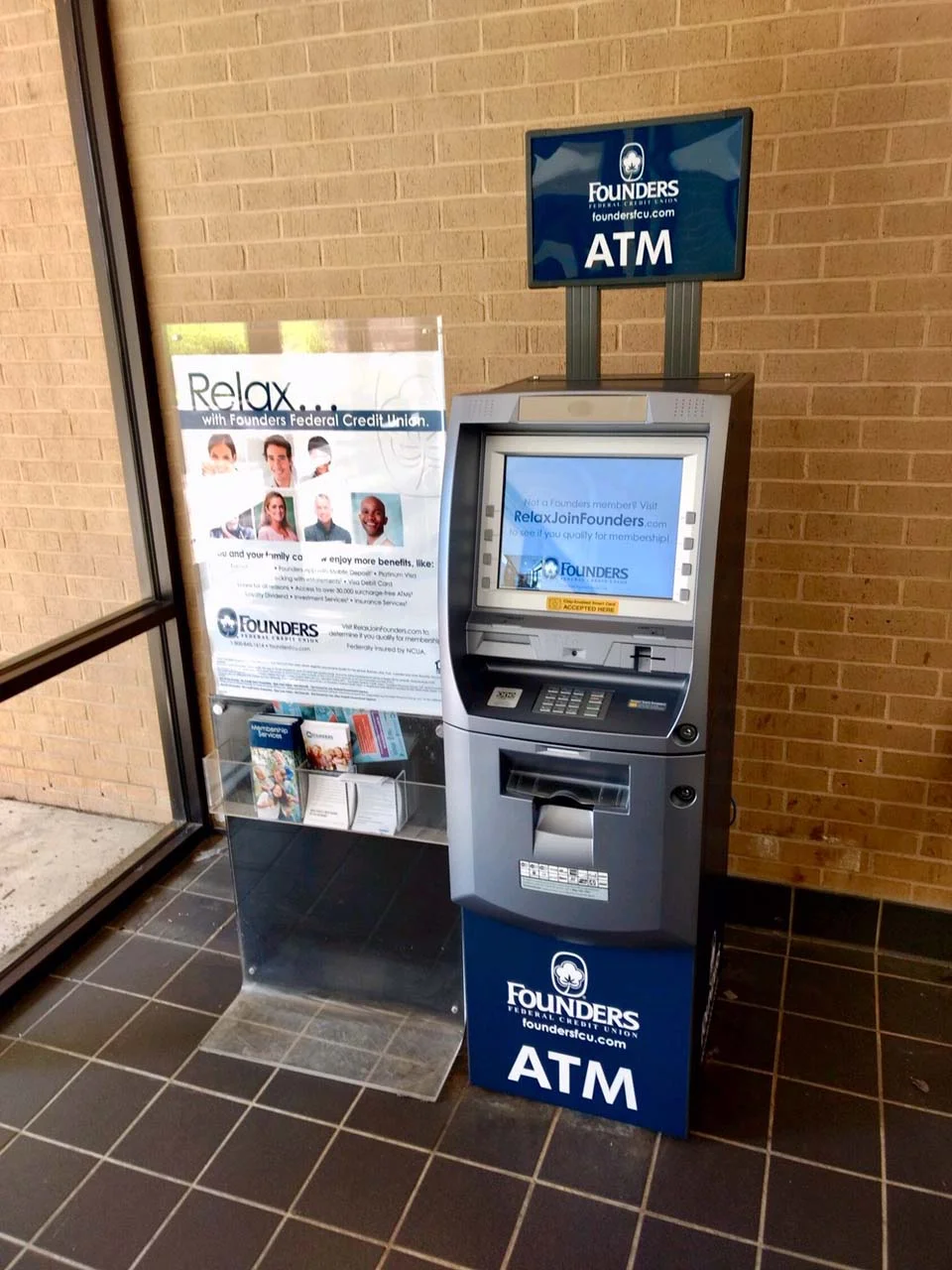
    • Attached brochure holders for educational materials

    Partnering with local companies to provide employees with easy cash access with an ATM is a valuable resource that banks and credit unions can also use to offer information vital to raising Americans’ financial literacy. And, with ATMatWork’s unique programs it is hassle-free and cost-effective.

    Our experts have more than 100 years combined experience. ATMs is all we do! Contact us today to find out how we can help you build a bank at work program that delivers results.